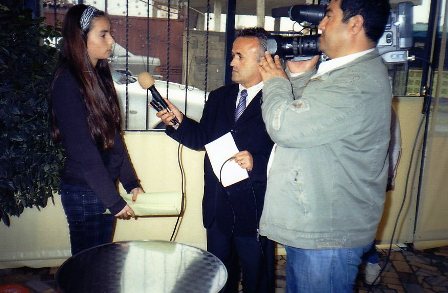
Successful Action Programme on child labour prevention and elimination implemented in collaboration with ILO-IPEC in Bathore
The implementation of the Action Programme on the establishment of a Child Labour Free Zone in Bathore, (suburbs of Kamza Municipality, Tirana) was followed with special attention by the Presidency of TUFESA, by its trade union representatives, as well as by teachers and school administration in Bathore No.1 School.
More than 35 teachers, pupils, local trade union leaders, local governmental and NGO-s representatives were mobilised monitoring more than 100 dropped out or/and at risk to drop out from school, (involved in WFCL or at risk to enter WFCL).
Results achieved and lessons learned will be used as an example for further engagement of TUFESA in child labour prevention and elimination and especially for child labour free zones.

Project institutional infrastructure established.
A detailed Workplan was prepared by TUFESA in close collaboration with trade union team and Bathore School Headmaster for AP implementation, approved by ILO-IPEC, serving as the basis of AP implementation.
A Memorandum of Understanding was Concluded with MOLSAEO to formally support the AP implementation. MOUs were also concluded with the Tirana Regional Education Directorate in the target area and with the school in Bathore, ensuring support of the AP implementation, including the school-based activities.
Teachers, pupils, parents, school administration representatives, engaged in direct concrete work with individual pupils dropped out or at risk to drop out, were met frequently during, discussing the situation, progress made and duties for the future.

Two-day training workshop on CLMS elements, NFE and SCREAM
A two-day training workshop on CLMS elements, NFE and SCREAM was organised in Bathore, on 22 and 23 October 2010, in collaboration with ILO-IPEC and CLU/MOLSAEO.
35 participants, (30 teachers and principal, representatives of the local government and education specialists from the Regional Education Directorate, and 5 participants from the Pupils’ Government), selected in consultation with school administration, took part in this workshop and were active during the discussions.

First day was focused on theoretical training and explanations on:
- International standards and national legislation on prevention and elimination of child labour, elements of Child Labour Monitoring System, good practices and lessons learned in prevention and elimination of WFCL in Albania.
- SCREAM package - “Supporting Children’s Rights through Education, the Arts and the Media”: how can teachers / trade union members raise awareness of children against the WFCL and how teachers can use SCREAM in their daily work.
- Non-Formal Education Manual, Teaching methodology and learner-centered approach, Learning styles, learner attributes and the related teaching approaches, and so on.
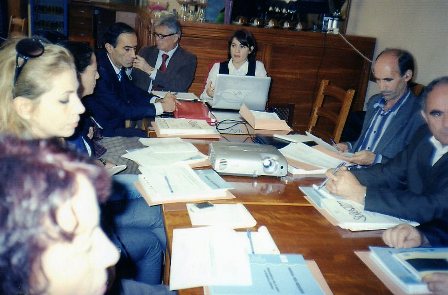
Second day was focused on concrete discussions on the AP, situation, work done, progress made, problems faced and duties for the next period.
The coordinator of the Project, Stavri Liko, spoke about the idea of child labour free zones and the importance of this AP in Bathore, not only for Kamza area, but also for Tirana and wider.
The Head of Bathore school team dealing with AP implementation, Derall Tota, made a detailed presentation on the work done, problems faced , progress done and duties to be followed in continuance of AP implementation.
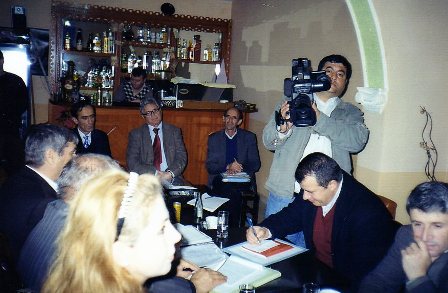
Concrete discussions were made, on actual situation regarding school dropout and child labour elimination, being focused to each of those 25 pupils dropped out from school and other 76 pupils at risk to drop out from school, subject of this AP implementation.
Teachers and pupils, members of Monitoring Groups, analysed the situation, speaking about all of them one by one.
It was agreed, also through a concrete action plan approved during this session, that teachers, pupils and parents committed to the monitoring groups, would coordinate better with local community, in order to continue the concrete work with them and their parents, aiming to bring them back in school as soon as possible.

Four Monitoring Groups (MGs) established and functioned
Four Monitoring Groups (MGs) composed of 4 members each, including teachers, parents and school administration, were established and functioned in the framework of AP implementation.
10 teachers, 8 pupils and 4 parents was the main team dealing with AP implementation. Many others, teachers and pupils, joined their colleagues working together to realise the objectives of this AP. Through analyzing data from workplace visits / school records / family and community visits, they identified more than 100 children dropped out from school and involved in WFCL or at risk to drop out from school and enter WFCL (street work, trafficking in children, and seasonal work in agriculture).

They assessed children’s needs (taking into account the children’s individual needs and the expressed wishes) and prepared individual files for each child identified in line with the DBMR.
They developed and prepared Individual Intervention Plans for each child identified and agreed with the child and his/her family on a school-based package of activities.
Three meetings of monitoring groups’ members were organised in Bathore during the AP implementation period.
The Project implementation started with a preparative meeting organised in Bathore, on the 8th of September 2010.
Teachers, pupils, parents, all of them monitoring groups’ members, as well as school administration representatives, took part in that meeting.
The chairman of TUFESA, Xhafer Dobrushi, took also part in the meeting.
After the presentation of activities, objectives, monitoring program and approach to be used during AP implementation, discussions and suggestions from participants, followed the meeting.
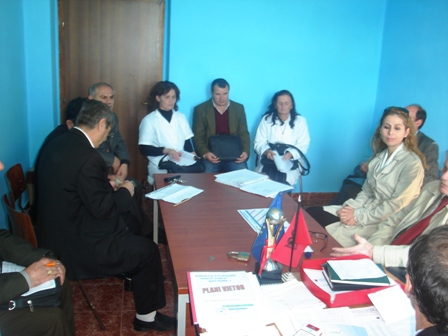
Wide discussions were made at the second meeting, of the monitoring groups members, organised on the 7th of October 2010. Concrete discussions were made about the situation of each pupil subject of the AP implementation.
Monitoring group’s members had identified the pupils who would be subject of the work, had contacted most of parents and had discussed their intention to bring back in school those pupils who had already dropped out and keep regularly in school those pupils who didn’t attend it regularly and were at risk to drop out.
It was important that teachers of monitoring groups had all the data about pupils they were dealing with, including names, parents’ situations, problems they face, progress they were doing, plans how would they continue to deal with them and so on.

Detailed information about each pupil was provided in the third meeting, organised on 11th of November, analysing the work done in the classroom, in the school, in the community with their parents and local authorities, mentioning also the results they had achieved during this period of time.
A detailed discussion was made in that meeting about the situation after almost four months of work in the framework of Project implementation, dealing one by one with all selected pupils.
Special engagement on labour market,
Worker’s Rights & Occupational Safety and Health
30 children aged 15-16 years were provided with:
1. An interesting visit, organised on 15th of November 2010, in a Garment Production Plant in Bathore. The owner of this plant, Selvie Oruçi, informed the pupils about the workforce, labour standards implemented, rights and obligations of the workers, vocational training measures, and occupational safety and health provided for all the workers, who generally are young females. She answered questions asked from pupils and insisted on learning better and better, because of the needs of labour market for skilled and able workers.

2. A special Session on Worker’s Rights & Occupational Safety and Health was organised on the same day at the VET Center in Tirana.
In the presence of the Director of the Centre, Robert Jano, two employees, Ermenita Shahu and Sofie Murati, informed the participants about the Centre, its functions, vocational courses they organise, teachers and didactic means they use and so on.
Then the specialist from the State Labour Inspectorate, Merita Gjashta, made two presentations: on Labour Standards and workers-s rights and occupation safety and health, analysing them in conformity with real Albanian labour market.
The Chairman of TUFESA Xhafer Dobrushi, spoke about the collective bargaining and collective agreement system, which is the most important tool for trade unions in their efforts to protect workers rights and provide effective occupational safety and health measures.
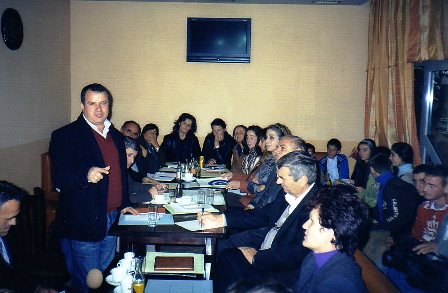
3. An interesting visit was organised following this session in the classes of the Centre, as those of computers course, foreign languages, cosmetics, electrical installations, conditioners, hydraulics, babysitter, auto service, tailoring and so on, where pupils were known with all of these kinds of courses, also visiting laboratories and listening to the explanations by the respective teachers and instructors.
Leaflets and other documents published from the Center were distributed to the participants.

Massive extracurricular, artistic, cultural and sportive activities
25 children dropped out from school and involved in WFCL and 76 pupils at risk to drop out from school and to enter WFCL were provided with extracurricular, awareness raising activities and recreational activities 2 hours per week for 1.5 months, from 20.09.10 to 12.11.10, based on SCREAM methodology.

In addition, two rounds of competitive activities were organised with participation of the same pupils, on the 18th of October and on 12th of November 2010.
More than 100 pupils, including all of those selected to work in the framework of the AP, took part in cultural and sportive disciplines, including football, volleyball, athletic, popular games, recitation, singing, dancing, painting and so on.

All teachers of the school took part in the activities, while 10 teachers engaged in the MG-s were the organisers of these activities, supported by the principle of the school and respective teachers of music and physical culture
The Chairman of TUFESA, Xhafer Dobrushi, attended both rounds of activities and greeted the participants, active pupils and teachers of the school or their commitment and the results.
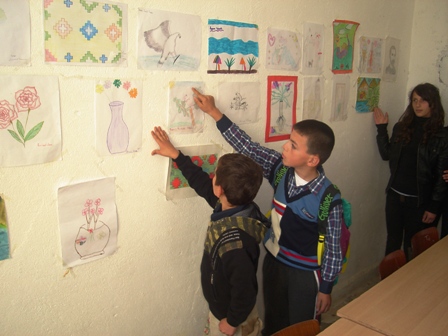
It was really impressive to see the participation of some pupils, who had left the school and turned back, as a result of the work done in the framework of the Project.
The organisation of these activities had a direct impact to all Bathore teachers efforts to keep pupils in school and, at the same time, it was a good example also for the administrations of other schools of the area, the district and wider.
Good practices identified, documented and shared for possible replication
Three good practices that emerged as a result of the activities carried out in the framework of AP implementation were identified and documented:
- Concrete work with individual pupils, based on detailed data and characteristics
The basis of good results achieved during this AP implementation was the concrete work they did with individual pupils.
It was important that teachers of monitoring groups had all the data about pupils they were dealing with, including names, parents’ situations, problems they face, progress they were doing, plans how would they continue to deal with them and so on.
They visited families, not only on a weekly basis, as in the AP description, but also more frequently according to the situation of each pupils and families, in order to monitor children and to advice to the families as per their individual needs.
They organised individual and/or group meetings with parents, aiming to re-shape a normal parent-child relationship, inform them on the existing social assistance and employment services and raise their awareness on the consequences of child labour.
In many cases they referred parents to social and employment services to obtain the social benefits they are entitled to and to find jobs, despite the fact that in so short period of time it was too difficult to be made visible progress in these directions.
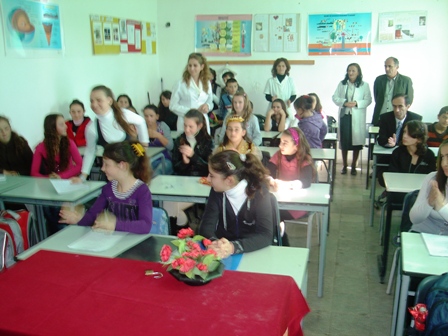
- Effective collaboration among all stakeholders of the area, teachers, pupils, parents, school administration, local community, Regional Educational Directorate, Ministry of Labour, VET centre and so on.
The basis of the achievement in this AP implementation was also the collaboration among all stakeholders, including teachers, pupils, parents, education directorate, local government, employers, coordinating actions to keep all children in school and eliminate child labour.
Representatives of all these stakeholders took part in various activities organised and many of them supported teachers and pupils in their concrete work with individual pupils and their parents. All of them shared information and each of them took the responsibility and acted according to individual specifics. Many examples were mentioned in the activities and especially during the conclusive workshop about the results of this effective collaboration.
- Knowing the experience already gained, especially in Levani School, Fieri district, in the attempts to establish child labour free zones, was used as the basis of the methodology in this AP implementation.
This AP was based on the long term experience gained by TUFESA in project implementation on child labour prevention and elimination and especially on the pilot project implemented in Levani School in Fieri district.
Methodology of project implementation, based on monitoring groups and concrete work with individual pupils and their families, activities organised, including field visits, monitoring groups meetings, artistic cultural and sportive activities, training seminars and workshops, all of them have been used effectively and gave visible results during Levani project implementation. These activities paved the way for further engagement of TUFESA on child labour prevention and elimination in Albania. Based on this experience, a similar project is under the way of implementation in two schools in Korca, supported by Dutch organisation of Education, AOb,
The AP outcomes, the good practices and lessons learned during the AP implementation are shared by TUFESA with education trade union structures in local and national level, especially in those districts already committed to prevent and eliminate child labour like, Fieri, Korca, Elbasani, Durresi, Shkodra and so on.

Conclusive workshop
An important one-day workshop was organised, in Bathore, on the 19th of November 2010, with 39 participants, including school teachers, pupils and parents, representatives from school administration, Regional Educational Directorate and NSC.
In the main report held by the Head of the TUFESA team in Bathore school, Derall Tota, were presented the main conclusions from the AP activities, outcomes, lessons learned, recommendations for replication of this approach in other schools of the district and wider.

The Headmaster of the school, Fatmir Koloshi, spoke about the commitment of all teachers of the school to realise the objectives of the AP and the support they had by school administration.
Teachers Ardiana Nikolli, Nexhmije Rama, Bilbil Billa, Dilaver Lena, presented the work done and results achieved by their respective Monitoring Groups. They spoke concretely mentioning many individual cases when pupils are turned back in school as e result of their concrete work in collaboration with other teachers, pupils, parents and community representatives. Pupils Jonela Mandri, Artemisa Taci, Sibe Cala etc, spoke about their commitment and mentioned their important role with their classmates, especially in cases when pupils themselves drop out from school and start working, without any impact from their families or their parents.
In the report and from the discussions were identified many teachers who were actively engaged and had relevant results as, Ardiana Nikolli, Vehbi Reçi, Rabie Damzi, Bilbil Billa, Dilaver Lena, Nexhmije Rama etc.
It is also result of their commitment that pupils like Lulzim Rata, Xhujana Gjici, Vespina Pergjegji, Liridona Poleshi, Aurela Lata, Hidie Nexha etc, are retuned in school after have been dropped out for weeks.
The project objectives related to pupils dropped out from school were realised as follows:
Out of 25 pupils dropped out from school, 10 pupils were returned in school, 7 have made visible progress and give hope to be returned, meanwhile other 8 continue to be problem and the work with them is continuing intensively.
Better are realised the objectives regarding pupils at risk to drop out from school:
Out of 76 of them, 52 were reintegrated in the school attending it regularly, being considered out of risk to drop out from school, 11 have made progress and other 13 still have problems in attending the school regularly, missing hours a day and/or days a week.
Present in the workshop, the Chairman of TUFESA, Xhafer Dobrushi, appreciated the work done in the framework of AP implementation and promised TUFESA continuous support for teachers and pupils of Bathore school and Kamza area in general.
On behalf of both TUFESA Presidency, he also expressed the gratitude to ILO-IPEC for this support, and ensure you that the experience gained and results achieved will be used effectively in TUFESA continues work to prevent and eliminate child labour in Albania.